Why Detection Method Matters More Than Repair Method
Most flat roof repair quotes skip past detection entirely. A crew climbs up, looks for obvious damage, and patches what they see. That works when the leak is a torn seam directly above the stain. It fails when water is entering thirty feet away at a parapet flashing and running down a slope in the insulation. The repair gets installed in the wrong location, the ceiling dries out for a few weeks, and the next heavy rain proves the leak was never addressed. Spending an extra hour on accurate leak origin detection often saves more than the repair itself costs, because it prevents the second and third visit.
Detection methods vary widely in accuracy, cost, and the conditions where they work. Infrared scans read trapped moisture in the insulation layer, but they need a clear thermal gradient and a dry surface. Electronic leak detection floods the roof and measures electrical conductivity through the membrane breach, which is precise but requires power and water access. A simple flood test isolates sections by damming and filling them, which is slow but conclusive. Visual and probe inspection, the cheapest option, depends entirely on the inspector's experience reading how water moves through a building assembly.
The choice of method also depends on what kind of membrane is on the roof. EPDM behaves differently than TPO under an infrared scan because of how the surface emits and reflects heat. Ballasted systems hide their seams under stone, which rules out most surface scanning and pushes the decision toward electronic detection or a careful flood test on isolated bays. Modified bitumen with a granulated cap sheet can mask small punctures from a visual walk, so probing the seams and flashings becomes essential. In Coatesville, where freeze thaw cycles work on every fastener and lap, the same roof can present three different failure patterns in three different seasons, and the detection plan has to flex with those conditions.
Detection and Repair: A Side by-Side Look
The table below compares the detection and repair pairings we use most often on Coatesville flat roofs. Costs assume a typical commercial or low slope residential roof under 5,000 square feet. Lifespans assume the underlying deck and insulation are still sound. If the substrate is saturated, no surface repair will hold, and the conversation shifts toward partial tear off or replacement.
| Approach | Best For | Detection Accuracy | Typical Repair Cost | Expected Lifespan | Trade-Off |
|---|---|---|---|---|---|
| Visual inspection + seam patch | Obvious split or open seam | Low to moderate | $300 to $900 | 2 to 5 years | Misses hidden entry points |
| Infrared scan + targeted membrane repair | Suspected wet insulation | High when conditions cooperate | $800 to $2,500 | 5 to 10 years | Requires dry surface and thermal contrast |
| Electronic leak detection + cover patch | Single membrane breach, hard to locate | Very high | $1,200 to $3,500 | 5 to 12 years | Higher upfront, needs water and power |
| Flood test + flashing rebuild | Parapet, drain, or curb leaks | Conclusive | $1,500 to $4,500 | 8 to 15 years | Slow, requires drains to be plugged |
| Full coating system over sound membrane | Aging membrane with multiple small leaks | N/A (preventive) | $3 to $7 per sq ft | 10 to 15 years | Will not save a saturated assembly |
Reading across the rows, a pattern emerges. Cheap detection paired with cheap repair gives you the shortest lifespan and the highest risk of a repeat leak. As detection accuracy goes up, the cost of being wrong drops, which is why we push back when an owner asks for the lowest priced option on a roof that has already been patched two or three times. At that point you are no longer buying a repair, you are buying time on a roof that needs a real plan.
There is also a hidden cost in the table that does not show up in the dollar columns. Every failed repair extends the period during which insulation stays wet, fasteners corrode, and the deck loses structural value. A two year patch that fails at month fourteen does not just cost the price of a second repair, it adds another year of moisture exposure to materials that were already compromised. When we walk owners through the comparison, we frame the lifespan column as a floor, not a ceiling, and only when the detection step was done honestly.
What the Comparison Means for Your Decision
If your roof is under ten years old with a single recent leak, the math usually favors precise detection followed by a targeted repair. You preserve the warranty window, the insulation is likely still dry, and a clean repair at the actual entry point can deliver close to the membrane's remaining design life. If your roof is past fifteen years and showing seam fatigue across multiple areas, paying for electronic detection on each new leak becomes inefficient. A coating system or partial replacement starts to look reasonable, and that decision should be informed by a moisture survey of the insulation, not just the surface condition. When interior damage has already started, our commercial roof repair work coordinates with drying so the ceiling assembly is not sealed up over wet materials.
How Coatesville Commercial Roofing Handles an Active Leak
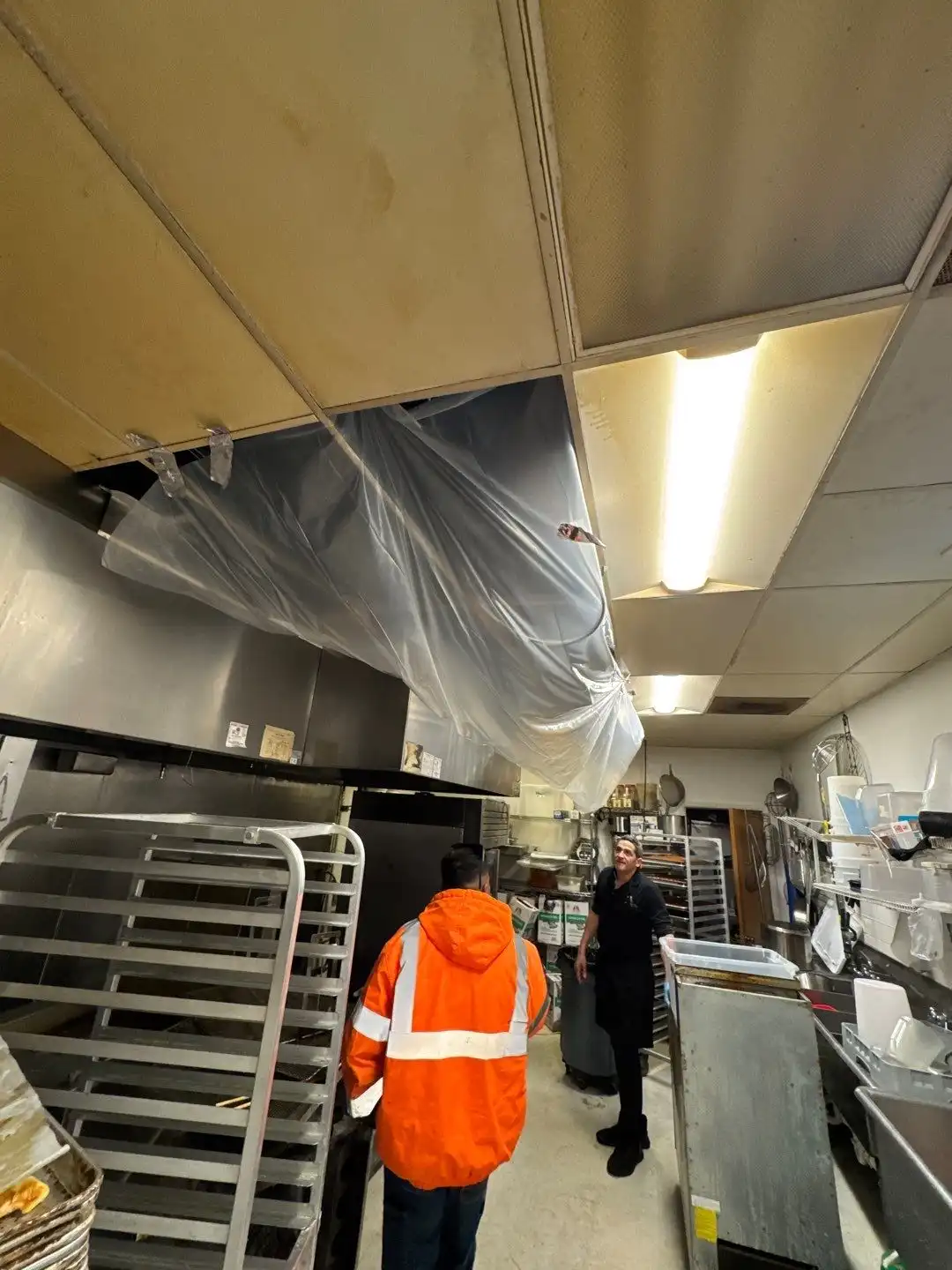
When a Coatesville property owner calls in with water actively coming through the ceiling, the first conversation is about severity, not scheduling. We ask where the water is showing, how fast it is moving, what is below the affected area, and whether the building has had recent roof work. That phone assessment determines whether we prioritize a tarp and dry in visit before the formal inspection, or whether the leak can wait for a daylight diagnostic with the right detection equipment on the truck. Inspections are scheduled quickly, and for active leaks we get protective measures in place so interior finishes and inventory are not taking on more water while the detection work is planned.
Once the roof is stabilized, the detection step drives the repair scope rather than the other way around. That sequence is what separates a repair that lasts from a patch that buys a season. It is also what lets us give an honest answer when an owner asks whether their roof has years left or whether the smarter spend is toward replacement.